 0
0
 0
0
Rating: 4 out of 5

Have you ever heard of the politician Benjamin Disraeli? If you are like me, then the answer is hell naw! The reason for the hell naw is that Disraeli is a politician from the great land of the United Kingdom. As an American, I know little about U.S. History. Let’s give a little history lesson on Disraeli. Benjamin Disraeli was the 1st Earl of Beaconsfield, a British statesman and Conservative politician who served as Prime Minister of the United Kingdom for two terms. British history is far from anything I learned in school. Disraeli’s accomplishments include being a central figure in creating the modern Conservative Party, having an influential voice in world affairs, where he preached one-nation conservatism while expanding military action.
As a great man in British history, obviously, some of his political career was made into a play. British writer Louis N. Parker wrote a comedy play with dramatic elements to provide a fictional depiction of Benjamin Disraeli’s life around 1875. This is a moment of history when he arranged the purchase of the Suez Canal. In the play, there are also two love stories: Disraeli and his boo-thang wife, and a young couple. The play was a popular stepping stone for George Arliss, who played the lead role and went on to star in a feature film. Like most plays back in the day, if you are entertaining enough. In 1929, the play was adapted into the film Disraeli. The film was directed by Alfred E. Green, with Warner Bros. backing, and George Arliss reprised his role from the play.
The film starts in the mean halls of Parliament in 1874. Benjamin Disraeli (Arliss) has an ambitious foreign policy plan aimed solely at expanding the British Empire. His latest measure was voted down in the House of Commons after a speech from his greatest rival, William Gladstone. Disraeli’s defeat seems imminent when he learns that the Khedive of Egypt needs funds and is willing to sell the controlling shares in the Suez Canal. This is BIG news as control of the canal would secure control of India. This is right up Disraeli’s alley, but the Head of the Bank of England, Michael Probert, tells Disraeli that he opposes this, or that there isn’t a snowball chance in hell he would go through with it. Disraeli gets help from a leading Jewish banker, Hugh Myers. Hope you are with me, cause Disraeli is about to do some scheming.
In the world of love in this film, Lord Charles Deeford (Torrence) proposes to Lady Clarissa Pevensey (Bennett). Even though Lady Clarissa loves Lord Charles, she rejects his ass. He wants to enjoy his wealth and the high life. Homeboy just wants to coast and chill for the rest of his life. Lady Clarissa is not about this life; she wants an ambitious husband and admires the one and only Disraeli. Lord Charles, on the other hand, has no opinion of the Prime Minister. Even though Disraeli is the Prime Minister, this doesn’t mean he doesn’t have time to play matchmaker. He sees potential in Lord Charles and wants to see Lady Clarissa happy. Disraeli convinces Charles to come work for him and tells him about his plan to purchase the canal, but doesn’t mention that he has eyes and ears, aka spies everywhere.
As you read, Disraeli really wants to buy the canal. The political scheming continues as Russia sends two spies to watch Disraeli because they want to seize total control over India. I swear, history seems to repeat itself. The spies are Mrs. Travers (Lloyd), who is part of the inner circles of the social elite, and Mr. Foljambe. The genius of Disraeli is that he knows this, and he hired Foljambe as his personal secretary just to make sure he could keep an eye on him. That is an OG move right there.
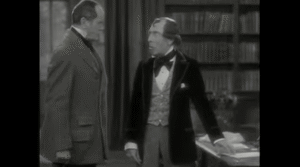
Foljambe asks Charles if Myers is going to provide financial banking, but Charles doesn’t say jack, but his body language tells a different story. This leads Mrs. Travers to send Foljambe back to Russia to warn them. Seeing his goal evaporate, Disraeli decides to send an agent to the Khedive, and Lady Clarrisa states that Charles should go. Charles’s lazy ass somehow persuades the Khedive to accept Myers’s cheque in exchange for shares. When Disraeli hears the news, dude breaks out the stanky leg, but Myers rolls up and dampens his mood by saying his banking house has been driven to absolutely zero funds, and the cheque is worthless. Disraeli knows what is going on, and when Mrs. Travers rolls up, Disraeli tells her of the purchase, and she confesses to sabotaging Myers.
The film’s conclusion shows that Disraeli is a master politician and strategist. This dude summons Probert and forces him to sign a document granting Myers unlimited credit by threatening him with Parliament’s power. BIG DICK ENERGY!! Disraeli gets what he wants: Myers’ name is restored, the deal is completed, and Queen Victoria adds Empress of India to her other titles. This allows Disraeli to have an audience with the Queen. BIG DICK ENERGY!!
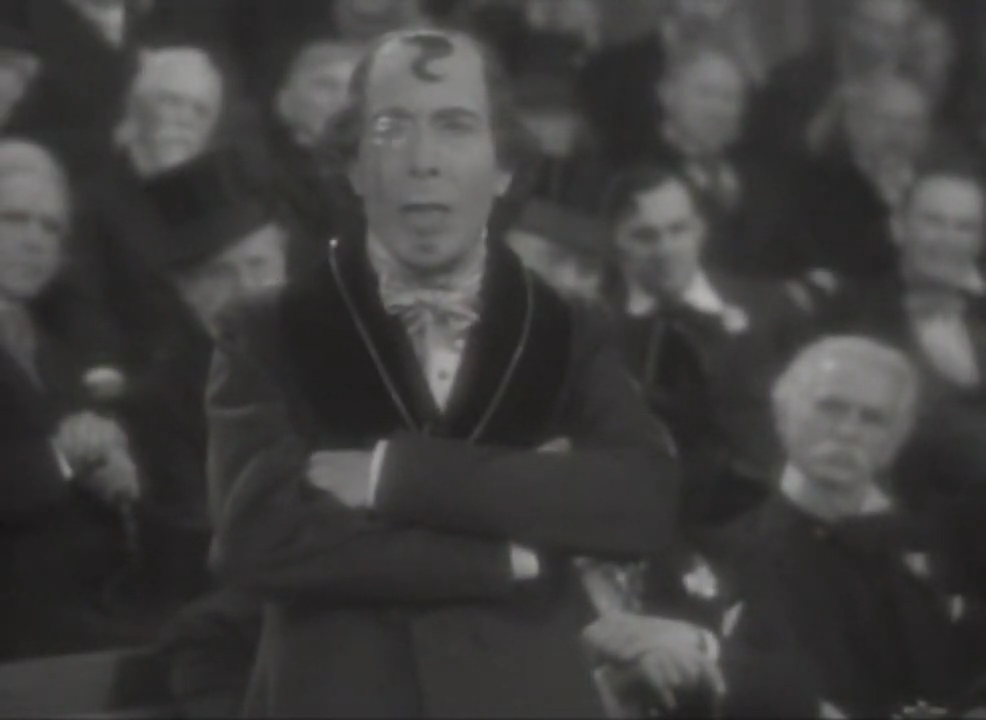
All the accolades and praise need to be given to George Arliss as the legendary leader, Disraeli. First, what was up with that hairstyle? Where the hell did you get that idea from, and who the hell told you it looked good? GAWD DAMN!!! Arliss was great in this role, as you can tell, he was used to it as he played it during the stage performance. Arliss won Best Actor, making him the first British actor to win, the first to win for a remake of a previously produced movie, and the first to win for reprising a movie role. BIG DICK ENERGY!! Arliss made Disraeli look and sound sniveling and weaselly. It added to the overall feel and performance of this film.
I don’t know much about Benjamin Disraeli, but from this film, he was a powerful man who increased the United Kingdom’s power and influence through his one-nation views and policies. George Arliss is great in this role as he played the part on the stage. He commanded this performance and made the film go. Like many of us, we need to learn more history and see who started what, as it is influential today.


